

Scientific Writing & Publishing for Mycologists
A practical course on turning mycological research into clear papers, from structuring a manuscript and presenting data to peer review, open data and choosing a journal.
Programme identification
- 1.1Programme name
- Scientific Writing & Publishing for Mycologists
- 1.2Type of qualification
- Course
- 1.3Provider / endorsing institution
- Fungaris – International Institute of Mycology, School of Mycology & Fungal Science. A Fungaris programme of its own, not endorsed by a university.
- 1.4Mode of study
- Online, with live sessions in a small group, recordings and a virtual campus.
- 1.5Duration (hours / ECTS credits)
- 3 months (12 weeks) · 72 hours in total · 6 modules of 12 hours · 12 live sessions of 2 hours. ECTS credits: not applicable (Fungaris own programme, not an official university degree).
- 1.6Language
- English
- 1.7Start and end dates / intake
- Next intake: 11 January 2027 to 2 April 2027. Enrolment closes on 4 January 2027. Following intake: 8 March 2027. How intakes work →
Overview
2.1Programme description
This course helps you turn mycological work into papers that editors, reviewers and readers can follow. Whether you are writing up a thesis chapter, a laboratory study or a set of interesting field records, you begin by planning the paper: defining the main message, identifying the right audience and choosing a suitable journal. You then work through the structure of a research manuscript section by section, learning what belongs in the introduction, methods, results and discussion, and how to write each one clearly and concisely in English.
Mycology has its own conventions, so the course gives special attention to figures, photographs and micrographs of fungi, and to writing species descriptions and field records that others can reuse. You also learn how peer review works, how to respond constructively to reviewers, and the core principles of publication ethics, authorship and data sharing. The last module covers open data, preprints and ways of communicating results beyond the journal. The course is aimed at early-career researchers, postgraduate students and amateur mycologists who want to publish. Sessions are taught live by experienced authors and editors. For the final project, each student drafts or revises a short manuscript and receives detailed written feedback.
2.2Why it matters / what need it meets
It meets a practical need: applied, up-to-date knowledge in fungal science, useful in areas such as research and academia, scientific publishing, museums and collections, non-profit organisations.
Mycology is moving fast and good practical training is still scarce. This programme gives you a structured path, taught live by people who work in the field, so you can apply what you learn with judgement and safety.
Objectives and competences
3.1General objective
To finish the programme able to apply its content professionally and with judgement. In short:
A practical course on turning mycological research into clear papers, from structuring a manuscript and presenting data to peer review, open data and choosing a journal.
3.2Specific objectives
- Build the foundations: Planning a Paper and Choosing a Journal; Structuring a Research Manuscript.
- Put them into practice: Figures, Tables and Images of Fungi; Writing Species Descriptions and Field Records.
- Apply everything to a real case: Peer Review, Revision and Publication Ethics; Open Data, Preprints and Communicating Results.
- Complete a final project reviewed by your tutor.
3.3Competences you will gain
- Plan a paper around a clear central message.
- Structure and write each section of a research manuscript.
- Prepare figures and images of fungi that meet journal standards.
- Write species descriptions and field records that others can reuse.
- Navigate peer review and publication ethics with confidence.
Student profile
4.1Who it is for (entry profile)
Early-career researchers, postgraduate students and amateur mycologists who publish.
4.2Entry requirements
A working command of English and some research material, such as data, notes or a draft, are recommended. No prior publication experience is required.
4.3Career paths (exit profile)
- Researcher or postgraduate in mycology
- Scientific editor or science writer
- Research officer in a museum or herbarium
- Amateur mycologist contributing to the literature
- Grant and report writer in research organisations
Outcomes depend on your experience and on your local market.
Study plan
5.1Overall structure (modules and workload)
| Module | Title | Phase | Topics | Hours |
|---|---|---|---|---|
| 01 | Planning a Paper and Choosing a Journal | Foundations | 3 | 12 |
| 02 | Structuring a Research Manuscript | Foundations | 3 | 12 |
| 03 | Figures, Tables and Images of Fungi | Practice | 3 | 12 |
| 04 | Writing Species Descriptions and Field Records | Practice | 3 | 12 |
| 05 | Peer Review, Revision and Publication Ethics | Application & project | 3 | 12 |
| 06 | Open Data, Preprints and Communicating Results | Application & project | 3 | 12 |
| Total | 72 |
6 modules × 12 hours = 72 hours: 24 hours of live sessions, and the rest for campus study, exercises and the final project.
5.2Content by module
Hover or tap a module to follow the path from the first session to the final project. Open a module to see the topics it covers.
- Defining your main message
- Article types and target readers
- Choosing a journal and reading author guidelines
- Writing an effective introduction
- Methods that others can repeat
- Results and discussion that stay focused
- Designing clear figures and tables
- Photographing and presenting fungi
- Captions, scale bars and image integrity
- Elements of a species description
- Reporting specimens, vouchers and sequences
- Writing up notable field records
- How peer review works
- Responding to reviewers
- Authorship, ethics and conflicts of interest
- Sharing data and code
- Preprints and open access options
- Summaries for wider audiences
5.3Company placement
This programme does not include a company placement. Practice is built into every module through exercises, case studies and the final project.
5.4Final project
A short manuscript or manuscript section drafted or revised during the course, ready for submission or further development.
Methodology
6.1How it is taught
- Live online sessions, usually weekly, with a working professional and a small group.
- Recordings of every session, so you can catch up if work or time zones get in the way.
- Exercises and real case studies in every module.
- Tutoring: your tutor answers questions and gives feedback on your exercises and project.
6.2Platform and resources
A Moodle virtual campus with session recordings, readings, exercises and forums for each module. You need a computer, an up-to-date browser and a stable connection; a webcam and microphone are recommended.
Technical requirements →6.3Estimated weekly workload
About 6 hours a week for 12 weeks: one 2-hour live session on a weekday evening, plus study and exercises on the campus at your own pace.
Assessment
7.1Assessment system and weighting
Progress is assessed through participation in live sessions and short writing exercises after each module. The final project is reviewed by the professor with detailed written feedback.
7.2Requirements to pass
- Complete every module, by attending the live sessions or watching the recordings.
- Hand in the module exercises.
- Have your final project approved by your tutor.
Teaching team
8.1Academic direction
At Fungaris, the Fungal Science school coordinates the content and quality of this programme. The academic director of each intake is named in the intake guide.
8.2Faculty
Taught by professionals who work in the field. The tutor for each intake is confirmed before the start.
Meet our faculty →Certificate
9.1Certificate awarded
Course Certificate
On completing the programme and its project, Fungaris issues a Course Certificate. Fungaris certificates are the institute's own. Whether an employer, school or authority recognises them depends on that organisation and on local rules in each country.
9.2Issuing body / recognition
Issued by Fungaris (operated by Nexora Generation, S.L.) as a digital certificate. It is a Fungaris certificate of its own: it is not an official university degree and does not award ECTS credits.
About our certificates →Admission and enrolment
10.1Admission process (steps)
- Send your request through the form or write to admissions.
- Admissions reviews your profile and confirms the start date, the session schedule and the fee.
- You secure your place with full payment or a 40% reservation.
- You receive your campus access and welcome guide before the first session.
10.2Documents required
- A valid identity document.
- Contact and billing details (personal or company).
10.3Deadlines
Enrolment for the intake starting on 11 January 2027 is open until 4 January 2027, or until the group is full (maximum 20 students).
10.4Fee and payment options
Fee: £340
- Full payment before the start: £272 (20% reduction).
- 40% reservation (£136) and 3 monthly instalments of £68.
10.5Grants, discounts and funding
Discounts: 10% for Fungaris alumni and 15% for groups of three or more people from the same organisation. Discounts cannot be combined with each other or with the full-payment reduction.
Your employer can pay for the programme and receive the invoice in the company name. Whether a public or employer training budget can cover the fee depends on your country, so check with them.
10.6Cancellation policy
The conditions for cancelling, withdrawing or moving to a later intake are explained in our cancellation policy and in your enrolment confirmation. Nothing there limits your rights under the consumer law that applies to you.
Cancellation and refunds →Additional information
11.1Frequently asked questions
Do I need experience to study Scientific Writing & Publishing for Mycologists?
A working command of English and some research material, such as data, notes or a draft, are recommended. No prior publication experience is required.
How is Scientific Writing & Publishing for Mycologists taught?
Live online, in 6 modules with a working professional, a small group and a final project.
How am I assessed?
Progress is assessed through participation in live sessions and short writing exercises after each module. The final project is reviewed by the professor with detailed written feedback.
What is the final project?
A short manuscript or manuscript section drafted or revised during the course, ready for submission or further development.
What certificate do I get?
On completing the programme and its project, Fungaris issues a Course Certificate. Fungaris certificates are the institute's own. Whether an employer, school or authority recognises them depends on that organisation and on local rules in each country.
What can I study after Scientific Writing & Publishing for Mycologists?
The natural next step is Diploma in Applied Mycology.
11.2Alumni testimonials
We only publish verified testimonials from real students. This programme does not have any published yet; they will appear here once its first intakes finish.
11.3Admissions contact
Write to info@fungaris.institute or use the contact form. Admissions answers in your language.
Read before you start.
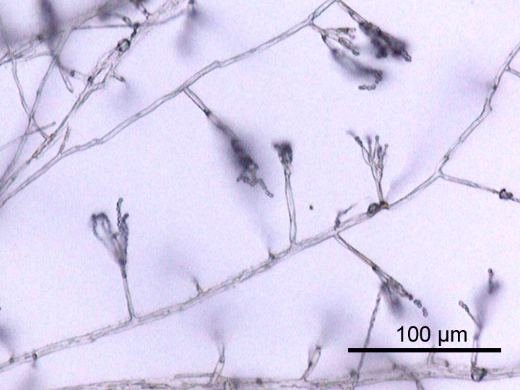 Fungal ScienceMushroom Microscopy for Beginners: Equipment and TechniquesA microscope opens a hidden world of spores, basidia and cystidia. Here is the equipment you need, the basic techniques and the safety rules for reagents.Read the article
 Fungal ScienceHow to Become a Mycologist: Paths, Skills and CareersFungi are moving from niche to mainstream, in food, materials, medicine and conservation. Here is how people actually build a career working with them.Read the article
Keep branching.
Join the next intake.
Pay in full with a 20% reduction, or reserve your place with 40% and pay the rest in monthly instalments. All prices are stated in pounds sterling (GBP).