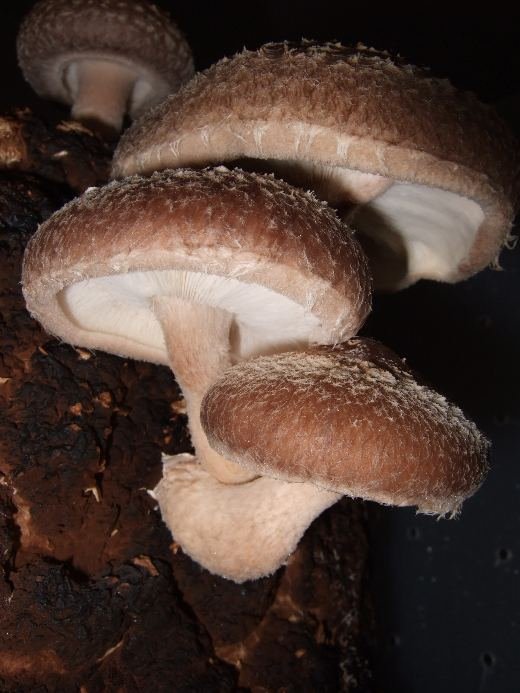
Shiitake (Lentinula edodes) has been grown on logs in East Asia for centuries, and log cultivation is still one of the most rewarding ways to grow mushrooms outdoors. It needs no lab, little equipment and almost no running costs. What it does need is patience: logs inoculated this year may not fruit until next year. In return, a well-made stack can produce flushes for several years, and many growers find log-grown shiitake firmer and more flavourful than mushrooms from indoor blocks. This guide takes you through the process step by step.
Choosing the right wood
Shiitake is a white-rot fungus that feeds on hardwood. The traditional and most reliable choice is oak, because its thick bark holds moisture and its dense wood feeds the fungus for years. Other suitable hardwoods include hornbeam, beech, alder, birch, sweetgum and some maples, though softer or thin-barked species usually fruit sooner and wear out faster.
| Wood | Typical behaviour |
|---|---|
| Oak | The classic choice: slower to start, long-lived logs, good yields. |
| Hornbeam, beech | Good results; beech bark is thin, so protect logs from drying out. |
| Alder, birch | Fast colonisation and early fruiting, but logs are productive for a shorter time. |
| Conifers, aromatic woods | Unsuitable: resins and other compounds inhibit shiitake. |
Use only healthy, freshly cut wood from living trees. Dead or long-stored wood is already being colonised by other fungi. Diameters of roughly 8 to 15 cm and lengths of about one metre are easy to handle and widely used. Keep the bark intact: it is the log's protective skin.
When to cut the logs
Cut logs in the dormant season, after the leaves fall and before buds open. At that time the wood holds the most stored sugars and the bark is firmly attached. Let logs rest for a few weeks before inoculation; many growers wait two to six weeks so that the tree's natural defences fade. Do not wait too long, or the logs will dry out and wild fungi will move in. Store them off the ground, in shade, until you inoculate.
Inoculating the logs
You need shiitake spawn, either wooden dowels (plug spawn) or sawdust spawn, a drill, wax and a brush or dauber.
- Choose a strain: suppliers offer cold-weather, warm-weather and wide-range strains. Pick one that matches your climate and the season in which you want harvests. Strain selection is covered in detail in Strain Selection and Culture Preservation.
- Drill holes in rows along the log, staggered in a diamond pattern, with holes roughly 15 to 20 cm apart within a row and rows a few centimetres apart around the circumference. Match the drill bit to your spawn type and the depth to the length of the dowels.
- Fill the holes immediately: tap in dowels with a hammer or pack sawdust spawn with an inoculation tool.
- Seal with wax: cover each hole with melted food-grade wax, such as cheese wax, beeswax or a paraffin blend, to keep moisture in and contaminants out. Wax larger bark wounds and the cut ends if you wish.
- Label each log with strain and date. Records will be invaluable when you compare results later.
Work in shade, avoid letting spawn sit in the sun and inoculate as soon as possible after drilling. If you want to produce your own spawn later, see Spawn Production.
Incubation: the spawn run
Stack the logs in a shaded, sheltered place, such as under trees or behind shade cloth, out of drying winds. Common arrangements are a low, crossed stack, a lean-to against a rail, or logs laid close to the ground on spacers. The goal is to keep the wood moist but not waterlogged, with enough air movement to prevent mould.
The spawn run usually takes six to eighteen months, depending on wood species, log size, strain and temperature. Water the logs during dry spells; a thorough soaking occasionally is better than frequent light sprinkling. Signs of progress include white mycelium visible on the cut ends and, eventually, the first mushrooms appearing after rain or a temperature drop. Watch for competing fungi, slugs and loose bark; Contamination Diagnosis and Pest Management explains how to recognise and limit them.
Shiitake on logs in the UK: timing, wood and rules
The mild, damp British climate suits log-grown shiitake, provided the logs have a shady, sheltered spot that does not dry out. A typical year:
- Winter: cut or obtain hardwood such as oak, birch or hazel while the trees are dormant.
- Late winter to spring: inoculate within a few weeks of felling, once hard frosts are less likely.
- Summer: let the mycelium colonise the logs and water them in dry spells.
- Autumn or the following year: first natural flushes, then crops mainly in spring and autumn, or forced by soaking.
In England you generally need a felling licence from the Forestry Commission to fell more than 5 cubic metres of timber in a calendar quarter, with exceptions, so the easiest option is to buy freshly cut logs from a woodland owner or tree surgeon. Wales and Scotland have their own systems, and tree preservation orders and conservation areas can also apply. The British Mycological Society advises against outdoor cultivation of non-native species, so discuss strains with your supplier and keep logs away from woodland. Raw or undercooked shiitake can cause shiitake dermatitis in some people. If you plan to sell, register as a food business first; more in our Business school.
Fruiting and forcing
Once fully colonised, logs fruit naturally after heavy rain combined with a temperature change, typically in spring and autumn. Many growers also force fruiting by soaking logs in cold water for 12 to 24 hours, often with a gentle knock on the ends. Mushrooms usually appear about one to two weeks later. Keeping freshly forced logs under a frost cloth or row cover helps hold humidity and protects caps from rain damage.
After a forced flush, let each log rest for roughly six to eight weeks so the mycelium can rebuild its reserves. By forcing logs in rotation you can spread harvests over the warm season. Harvest when the caps are about two-thirds to almost fully open but the edges still curl under. Well-managed oak logs can produce for several years, until the bark loosens and the wood is spent.
Always cook shiitake thoroughly. Raw or undercooked shiitake can cause shiitake dermatitis, an itchy, whip-like skin rash, in some people.
Harvest, storage and use
Cut or twist the mushrooms at the base and refrigerate them quickly. Shiitake dries very well: thinly sliced or whole caps dried at low temperature keep for months and develop a deeper umami flavour. Dried shiitake is a mainstay of East Asian cooking, which you can explore in Asian Mushroom Cuisine at our Culinary school. Spent logs can be broken up and used as mulch or added to a woodland garden.
Go further with shiitake
Log cultivation is a perfect introduction to the rhythm of fungal life, and it combines beautifully with garden beds of other species, covered in Outdoor Mushroom Beds and Garden Cultivation. If you want to master shiitake on logs and on indoor blocks, with live teaching from experienced growers, explore Shiitake Cultivation on Logs and Blocks at Fungaris.