

Tropical Mushroom Cultivation: Wood Ear & Straw Mushroom
Grow warm-climate species such as Auricularia and Volvariella using low-cost methods suited to tropical and subtropical regions.
An overview of what you will study and build.
Tropical Mushroom Cultivation: Wood Ear and Straw Mushroom focuses on species that thrive where temperate mushrooms struggle. You will learn to grow Auricularia wood ear on sawdust bags and Volvariella straw mushrooms on beds of rice straw or cotton waste, using simple and affordable methods. The course explains how to manage heat and humidity without expensive equipment, control pests common in warm climates, and dry, pack and sell tropical mushrooms for local and regional markets.
In tropical and subtropical regions these species offer a practical route to food production and income from agricultural residues, often with modest investment. Methods developed by smallholders in Asia, Africa and Latin America are well proven and adaptable. The course suits growers in warm climates, development project staff and farmers looking for a new crop. In the final project you design a low-cost production unit for wood ear, straw mushroom or both, adapted to your local climate, materials and markets, and your professor reviews it with practical feedback.
6 modules, one growing line of knowledge.
Hover or tap a module to follow the path from the first session to the final project. Open a module to see the topics it covers.
- Auricularia and Volvariella biology
- Other warm-climate species
- Choosing species for your region
- Sawdust and residue formulations
- Bagging and heat treatment
- Incubation and opening bags
- Rice straw and cotton waste preparation
- Building indoor and outdoor beds
- Spawning and bed management
- Passive cooling and shading
- Keeping humidity high cheaply
- Ventilation in hot climates
- Flies, mites and beetles
- Rodents and storage pests
- Low-cost prevention measures
- Sun and mechanical drying
- Packing dried and fresh product
- Local and regional sales
Tropical Mushroom Cultivation: Wood Ear & Straw Mushroom
By the end you will be able to:
- Select warm-climate mushroom species suited to local conditions.
- Produce wood ear on sawdust or residue-based bags.
- Build and manage straw mushroom beds.
- Control heat, humidity and pests with low-cost methods.
- Dry and pack tropical mushrooms for sale.
Where this programme sits in the school.
Where this programme can take you.
Roles and uses that build on what you learn here. Outcomes depend on your experience and local market.
- Smallholder mushroom producer in a warm climate
- Agricultural development project officer
- Cooperative production coordinator
- Extension trainer for mushroom cultivation
- Small business owner selling dried mushrooms
Requirements, assessment and certificate.
Admission requirements
No prior knowledge is required. Learners benefit from access to local agricultural residues and a simple shaded growing space.
How you are assessed
Assessment is based on participation in live sessions and practical exercises in each module. The final project is reviewed by the professor with written feedback.
Final project
A low-cost production unit design for wood ear and/or straw mushroom, adapted to local climate, materials and markets.
Certificate
Course Certificate
On completing the programme and its project, Fungaris issues a Course Certificate. Accreditations are assessed according to the training completed and the local regulations of each country.
How the programme grows, phase by phase.
- Warm-Climate Species Overview
- Wood Ear Substrates and Bags
- Straw Mushroom Beds and Cotton Waste
- Managing Heat and Humidity
- Pests in Tropical Systems
- Drying and Selling Tropical Mushrooms
Related searches
Questions about this programme
Do I need experience to study Tropical Mushroom Cultivation: Wood Ear & Straw Mushroom?
No prior knowledge is required. Learners benefit from access to local agricultural residues and a simple shaded growing space.
How is Tropical Mushroom Cultivation: Wood Ear & Straw Mushroom taught?
Live online, in 6 modules with a working professional, a small group and a final project.
How am I assessed?
Assessment is based on participation in live sessions and practical exercises in each module. The final project is reviewed by the professor with written feedback.
What is the final project?
A low-cost production unit design for wood ear and/or straw mushroom, adapted to local climate, materials and markets.
What certificate do I get?
On completing the programme and its project, Fungaris issues a Course Certificate. Accreditations are assessed according to the training completed and the local regulations of each country.
What can I study after Tropical Mushroom Cultivation: Wood Ear & Straw Mushroom?
The natural next step is Diploma in Gourmet Mushroom Production.
Read before you start.
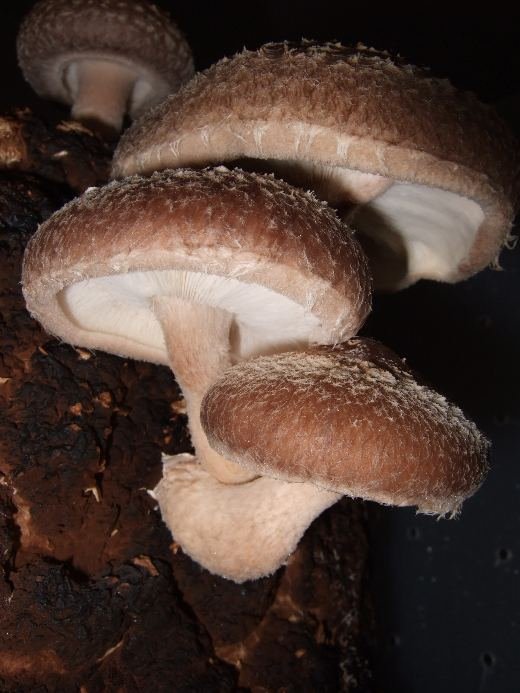 CultivationHow to Grow Shiitake on Logs: A Step-by-Step Outdoor GuideLog-grown shiitake takes patience, but a well-made stack of logs can fruit for several years. Here is how to do it step by step, from cutting wood to harvest.Read the article
 CultivationHow to Grow Oyster Mushrooms at Home: Step-by-Step GuideOyster mushrooms are the most forgiving gourmet species to grow. This step-by-step guide takes you from straw and spawn to your first harvest, and on to a small farm.Read the article
Keep branching.
From our species guide.



Join the next intake.
Pay in full with a 20% reduction, or reserve your place with 40% and pay the rest in monthly instalments. All prices are stated in US dollars (USD).