Identification
The harvested product consists of two parts: a mummified, yellowish-brown caterpillar a few centimetres long, completely filled with fungal tissue, and a slender, dark brown stroma that grows from the caterpillar’s head and pushes up through the soil surface. The fertile part near the tip carries embedded perithecia. In the field only the thin brown tip shows among grass and moss, which makes collecting difficult.
The species was long known as Cordyceps sinensis and was moved to the genus Ophiocordyceps in 2007 on molecular evidence. Its asexual stage has been described as Hirsutella sinensis. Because high prices encourage substitution and fraud, reliable identification of products usually needs DNA methods.
Habitat and ecology
O. sinensis grows in alpine meadows and shrubland at roughly 3,000–5,000 m on the Tibetan Plateau and in the Himalayas, including Tibet, Qinghai, Sichuan, Yunnan, Gansu, Nepal, Bhutan and northern India. Its hosts are soil-dwelling caterpillars of ghost moths (Hepialidae), mostly in the genus Thitarodes. The fungus infects the larva in the soil, kills it over winter and fruits from the dead caterpillar in spring, the origin of the Chinese name meaning winter worm, summer grass. Climate change and intense harvesting are considered threats to the species.
Uses and importance
The fungus has a long history in Tibetan and Chinese traditional medicine and is traded at very high prices; harvesting is a major source of cash income for many households on the Tibetan Plateau and in the Himalayas. Laboratory and animal studies have looked at extracts for effects on the immune system, fatigue and kidney function, often using cultured mycelium of uncertain identity rather than wild material. Robust clinical evidence in humans is lacking. A frequently repeated claim that O. sinensis contains cordycepin has been questioned: a 2017 study did not find that it produces cordycepin, which is characteristic of Cordyceps militaris.
Fruiting bodies are very difficult to produce artificially. Most commercial cordyceps products are made from cultured mycelium of various fungi or from C. militaris, not from wild O. sinensis.
Safety and edibility
Wild caterpillar fungus is not a food and should be regarded as a traditional remedy and research subject. Analyses have found high levels of arsenic and other heavy metals in wild-harvested material, and adulteration (for example added weights or substitute species) is common. Supplements are regulated as food in the EU and no health claim has been authorised for this species. Do not use it to replace medical treatment and consult a doctor before taking any cordyceps product, especially if you are pregnant, take medication or have a chronic illness.
Legally, the species is listed as second-class protected in China’s 2021 List of National Key Protected Wild Plants, and its trade is regulated. In Nepal collection was legalised in 2001 and is subject to royalties.
If you suspect mushroom poisoning, call your local emergency number or poison centre straight away, even before any symptoms appear, and keep the remains of the mushrooms.
Look-alikes
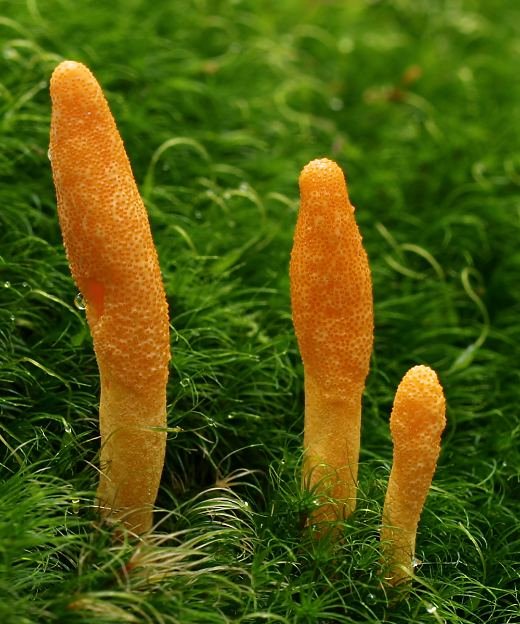
In trade, O. sinensis is substituted by other Ophiocordyceps species from the same region, by cultured mycelium sold under the same name and by Cordyceps militaris, which is orange and cultivated. Fakes made from moulded flour or plant material have also been reported. Only DNA testing gives a reliable answer for processed products.
Around the world
Worldwide, the caterpillar fungus is known by many names: yartsa gunbu in Tibetan, yarsagumba in Nepali, keeda jadi in India and dong chong xia cao in Chinese. Prices rose many times over between the 1990s and the 2010s, and disputes over collecting grounds have even turned violent. In the EU, trade press reported in 2025 that the species is listed as not novel in the Novel Food Catalogue.